AI4SoilHealth Toolbox
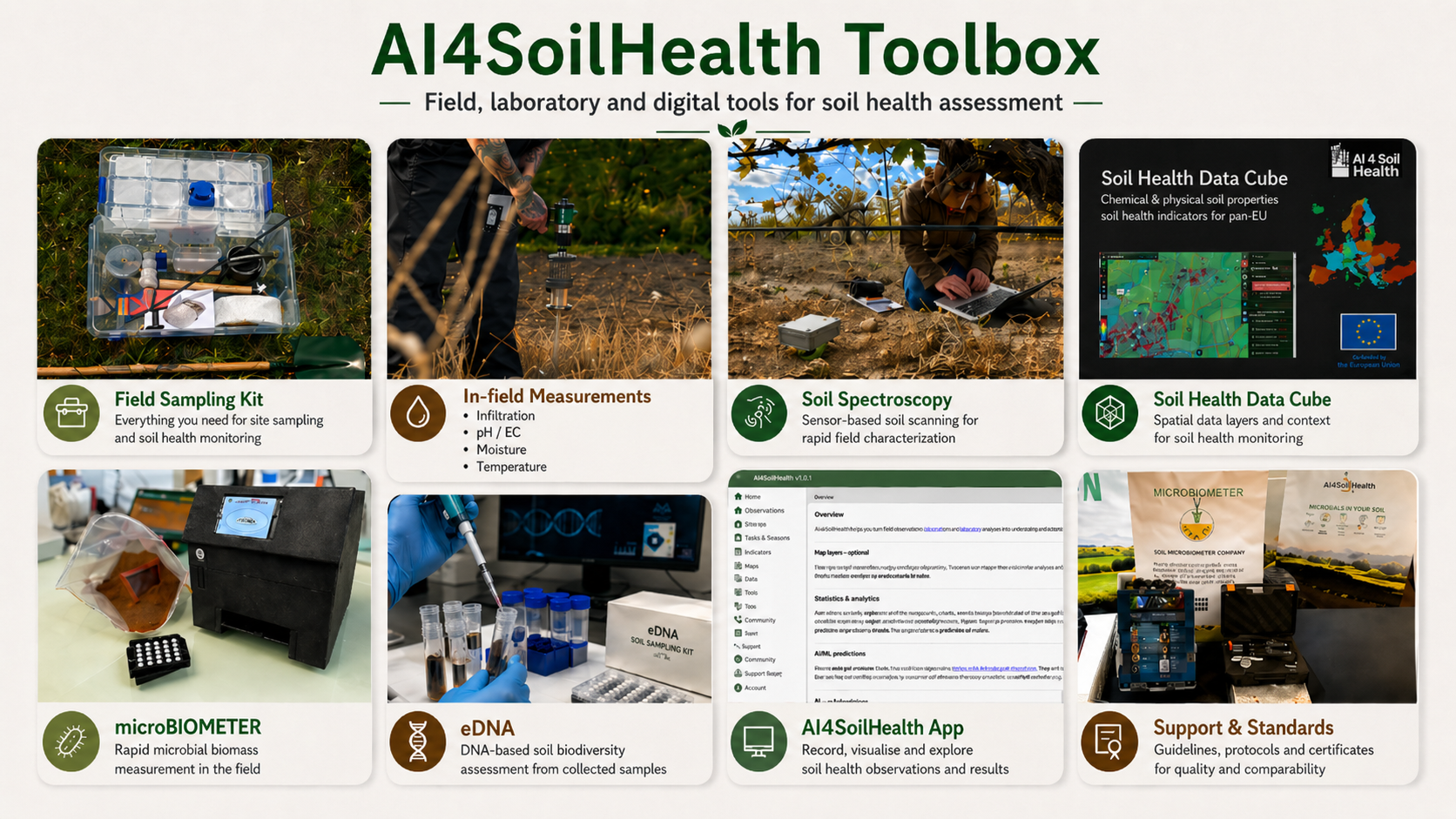
A practical toolbox for soil health assessment and monitoring
The AI4SoilHealth Toolbox brings together field methods, laboratory approaches, digital tools, and supporting data services to help users assess soil health in a practical and structured way.

What the toolbox helps users do
Assess key soil health descriptors
Use field, laboratory and digital tools to assess soil health descriptors related to the physical, chemical and biological condition of soil, including salinisation, soil organic carbon, structure, nutrient status, water regulation, and biodiversity.
Combine field, lab, and digital information
Move from observations and measurements to mapped information, records, and user-friendly outputs.
Choose methods that fit the situation
Select between rapid field screening, laboratory approaches, and digital services depending on the assessment need.
Support interpretation and communication
Use the toolbox to understand soil condition, identify possible constraints, and communicate results more clearly.
Part of the wider AI4SoilHealth project
Part of the AI4SoilHealth project
AI4SoilHealth is an EU-funded Horizon Europe project supporting the EU Soil Health Mission for 2030. It focuses on accelerating the collection and use of soil health information using AI technology to support the Soil Deal for Europe and the EU Soil Observatory.
This site presents the user-facing AI4SoilHealth Toolbox: the field methods, laboratory approaches, digital tools, and supporting services developed to help users assess soil health descriptors, record observations, interpret results, and connect local measurements with wider spatial context through services such as the Soil Health Data Cube. ## What is inside the toolbox
The toolbox combines four complementary elements:
Field tools and rapid assessment methods
Methods that can be used directly in the field or close to the field.Laboratory approaches
Methods that provide more detailed or confirmatory soil analysis.Digital tools
Tools for recording, visualising, organising, and communicating soil health information.Supporting data services
Background layers and contextual information that help users interpret local observations.
Who it is for
The toolbox is designed for users who need practical ways to assess or monitor soil health, including:
- farmers and growers,
- land managers,
- advisors and consultants,
- researchers,
- environmental professionals,
- and public authorities.
Featured toolbox components
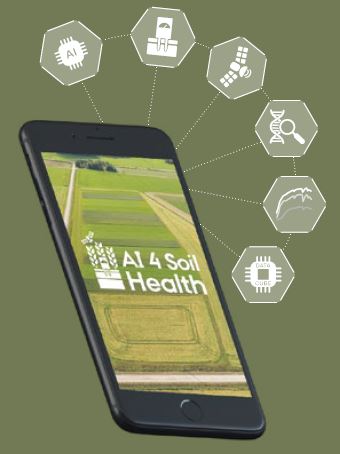 AI4SoilHealth App Main digital environment for recording, viewing, and organising soil health information.
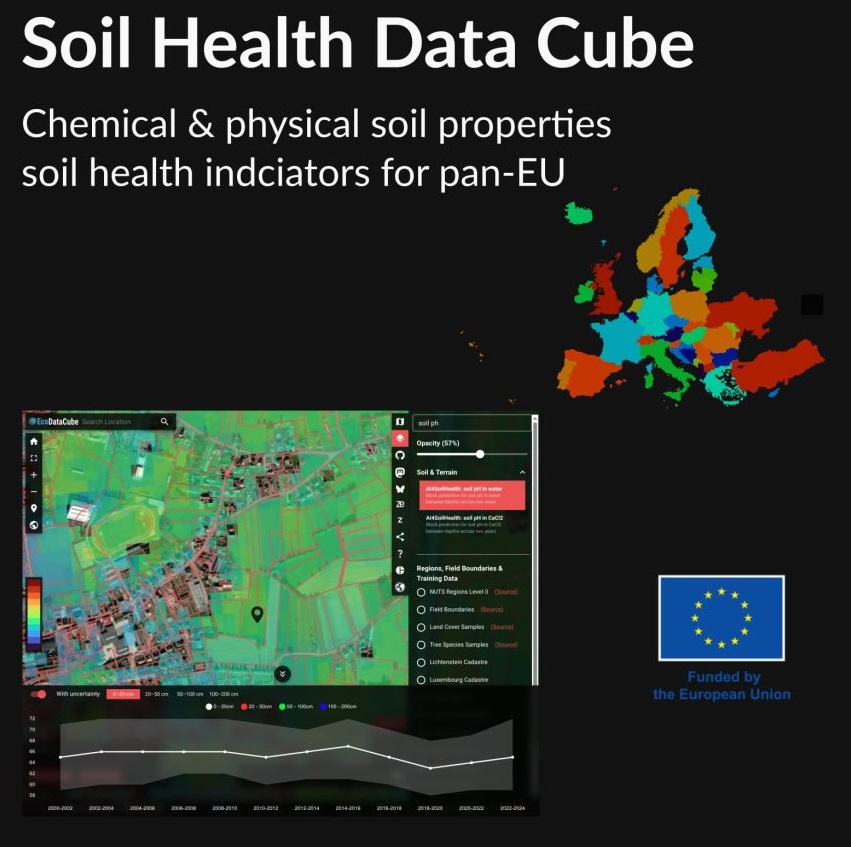 Soil Health Data Cube Supporting digital service that provides spatial context, layers, and wider environmental information.
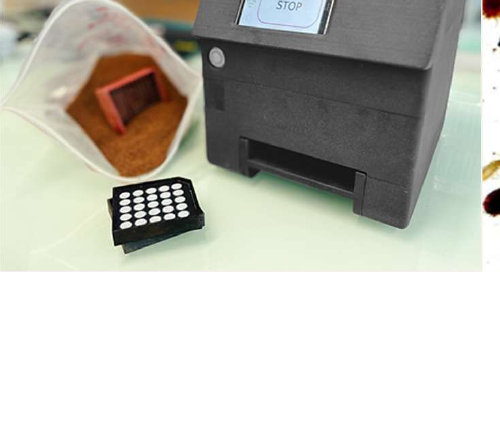 SEAR / Digit Soil Biological assessment tool focused on enzyme activity and soil functioning.
Start exploring
About the Toolbox
Understand the scope, purpose, and role of the AI4SoilHealth Toolbox.
Tools
Explore the individual methods, tools, and digital services included in the toolbox.
Soil Health Descriptors
Start from the soil issue or descriptor you want to assess.
How it Works
Follow a simple workflow from question to measurement, interpretation, and output.
The AI4SoilHealth Toolbox is not a single instrument or a single app. It is a combination of methods, tools, and services that can be used together to support soil health assessment and monitoring.